
FINE GRÅBØL
Denmark
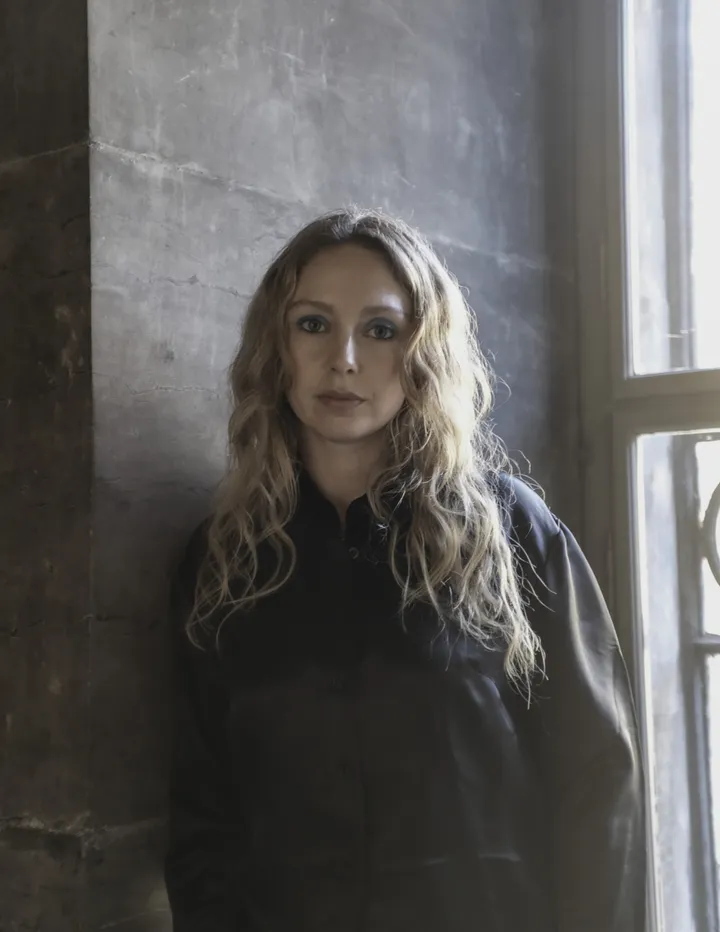
Danish author and poet Fine Gråbøl (b. 1992) will participate in the Long Night of Literature in Kolkata and Delhi.
Her novel What Kingdom offers an intimate portrayal of life within a psychiatric care unit for young people in Copenhagen. The novel earned her the Danish Bogforum Debut Prize 2021. Her second novel, Arise, which follows a group of children in an elite music school, has also received widespread acclaim.
Gråbøl’s work is celebrated for its poetic precision, its sensitivity to both collective and individual voices, and its ability to render institutional language as simultaneously oppressive and strangely lyrical. She is praised for her distinct ability to portray the tension between the individual and the ethos and language of institutional authority. Drawing on her own experiences, Gråbøl writes about the lives of young people navigating the rigid structures, languages, and power dynamics of establishments such as hospitals and schools.
Gråbøl holds an MA in Comparative Literature from the University of Copenhagen. Raised in central Copenhagen, she grew up singing in the Copenhagen Girls’ Choir and has a background in both music and dance. In addition to her novels, she co-founded the poetry collective BMS, which published Bone Marrow Lavender in 2018. Her books have been translated into seven languages.
She lives in Copenhagen.
From the jury’s appraisal of What Kingdom
The psychiatric care unit is a practice home; a place where you practice not scalding yourself with boiling water, not jumping out a window. The days pass: you sit in the kitchen playing solitaire, eating caramels, dyeing your hair, slipping into psychosis. The care unit is both a place and a state, a kind of limbo. Those who live there are sick, but it’s not a hospital. You can lock your own door, though the staff can always unlock it again.
Fine Gråbøl’s eye for inner tension is remarkably nuanced and finely attuned. It is also a literary device: to shape the experience of being present in the world, filled with dissonance, by blending the universally recognizable with the alien; and in doing so, to expand the reader’s understanding of what it means to live with psychological vulnerability. The novel is at once poetic and matter-of-fact; heartbreaking and critical. Complex, in other words, as life itself.